
For logistics partners
Transport-damaged goods, a second chance
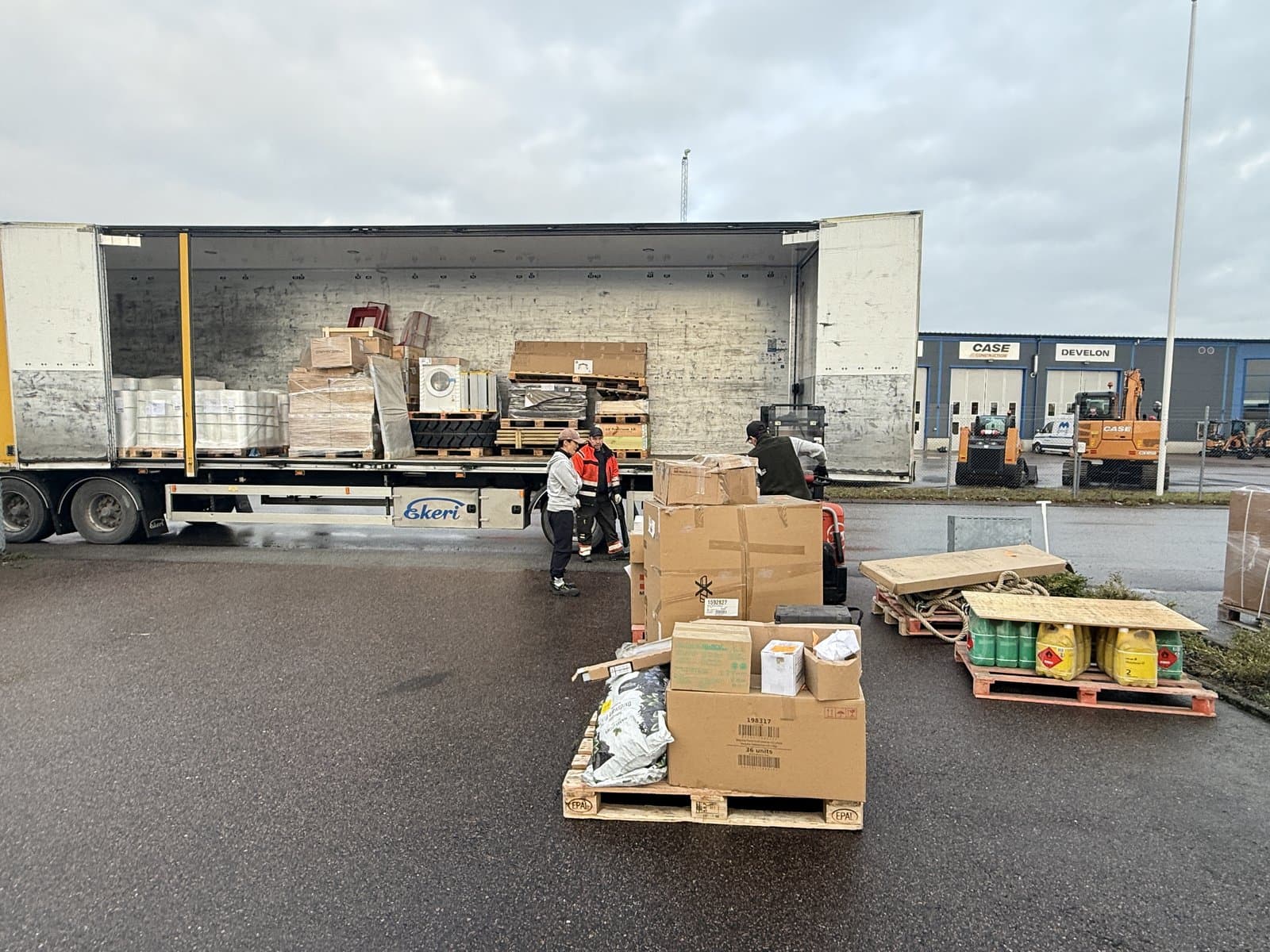
Much of the goods sent for destruction today is fully functional — only the packaging has suffered. Rewind receives, condition-grades and resells. The model is proven through our partnership with a leading Nordic logistics operator and replicable for more partners.
This is costing you money today
Transport-damaged goods are a blind cost
When a parcel or a pallet is damaged in transit, you face a classic dilemma: the sender has already been invoiced for the transport, the recipient will not accept the goods, and the item has to be dealt with quickly. The result is almost always the same three things:
- ✗Destruction or recycling — even of goods that are fully functional. The embodied carbon is lost entirely.
- ✗Recycling fees that weigh on the terminal budget — with no way to recover the value of what could actually have been resold.
- ✗A sustainability report that does not add up — internal circular-economy commitments are hard to demonstrate when all damaged goods go to landfill.
How we fit Rewind into your flow
Your existing routines — our receiving capacity
Implementation is deliberately simple. Your terminals keep doing exactly what they do today — we take over at the moment the goods would otherwise have gone to destruction.
- 1
We sign a supplier agreement
A standard agreement covering receiving, handling, profit sharing and CO₂e reporting. Getting started requires no IT integrations.
- 2
Your terminals get a delivery address + customer number
Fabriksvägen 5, 245 34 Staffanstorp, Sweden. The terminals book transport as usual — either through your existing transport flows, or we collect.
- 3
We receive, inventory and condition-grade every item
Employed staff at our warehouse in Staffanstorp. Every product is logged with category, weight, decision route and estimated avoided CO₂e emissions.
- 4
Reusable goods are sold via auction, B2B and wholesale
The majority of the goods is sold publicly on Tradera. Specialist products go through B2B auctions, and high-value items through wholesale and specialist trade. The rest is recycled by certified operators.
- 5
You receive a quarterly report with avoided CO₂e emissions and settlement
Formatted ready for ESRS E1 (CSRD). Profit sharing after handling costs are deducted — for many terminals the net outcome is positive.
Realistic scale
What can you expect per terminal?
Volume varies with terminal size, transport segment and season. Instead of a standard estimate, we take actual volumes from your own flows and run a partner-specific volume and CO₂e analysis at the first meeting — with conservative LCA factors (IVL, WRAP UK) and profit sharing after handling costs are deducted.
Who it's for
We already operate with nationwide logistics
The model is agnostic to logistics companies — we receive from any terminal, from any sender. These are the logistics segments where the model fits best:
Express and parcel transport
PostNord, UPS, FedEx, Schenker Privpak, Bring — terminals with high volumes of small parcels that are sometimes damaged in handling.
Groupage and pallet flows
DSV, Schenker, Bring Cargo — where whole pallets or larger consignments can be damaged during loading, transhipment or transport.
E-commerce logistics
3PL operators and e-commerce warehouses where returns, picking errors or obsolete stock currently go to destruction.
Contract logistics
Logistics partners running receiving operations for e-commerce retailers, where damaged goods and return flows are an operational cost without a recovery strategy.
What does your flow of transport-damaged goods look like?
A conversation about your routines, the volume entering the flow and what it means in avoided CO₂e emissions and net outcome.