
A
Repair
— The device is repaired and returned
- Claim report
- Portal choice
- Hand-in
- Repair
- Return
Process & methodology
From claim report to reporting back. The same core process in both our services, adapted to the flow each claim requires.
The process is designed to make phone claims simple, traceable and efficient. The policyholder guides themselves through a clear digital journey while the insurer gets control, lower costs and better data back.
The claim is registered and basic information collected.
The customer selects the action, shipping method and how the claim should be handled.
The device is verified and assessed for condition, function and value.
The device is sent in, received and registered in the flow.
Repair, replacement device or cash compensation is arranged.
Handed-in devices are reused, refurbished or recycled.
Results, sustainability data and follow-up delivered back.
Two typical flows
— The device is repaired and returned
— The device is verified and compensation paid
What you get back
Reporting documentation
Sustainability data
Analysis & follow-up
Happier customers
The process is designed to make claims handling simple, traceable and efficient. Whether it concerns a single property claim or a larger loss in a store or warehouse, the customer and the client get a clear process with control at every step.
The claim is registered and basic information collected.
Dialogue with the customer or contact person to secure the right documentation.
Inspection, verification and assessment of condition, authenticity and value.
Collection, transport or on-site inventory for major losses.
What can be reused, repaired, resold or recycled?
The compensation process is handled and products returned to the market where possible.
Results, sustainability data and follow-up delivered back.
Two typical flows
— Individual item
— Store / Warehouse
What you get back
Reporting documentation
Sustainability data
Analysis & follow-up
Decision support
Methodology
Rewind's services are built on the principle that the policyholder hands in the damaged item in return for compensation. This creates two direct effects: 100% claims verification and the item being reused, resold or properly recycled.
The climate impact we report is the avoided CO₂e emissions (gross) compared with manufacturing an equivalent new item. We use conservative standard factors as our main approach — we report lower values than the industry's average LCA data so the figures hold up to audit.
Sources
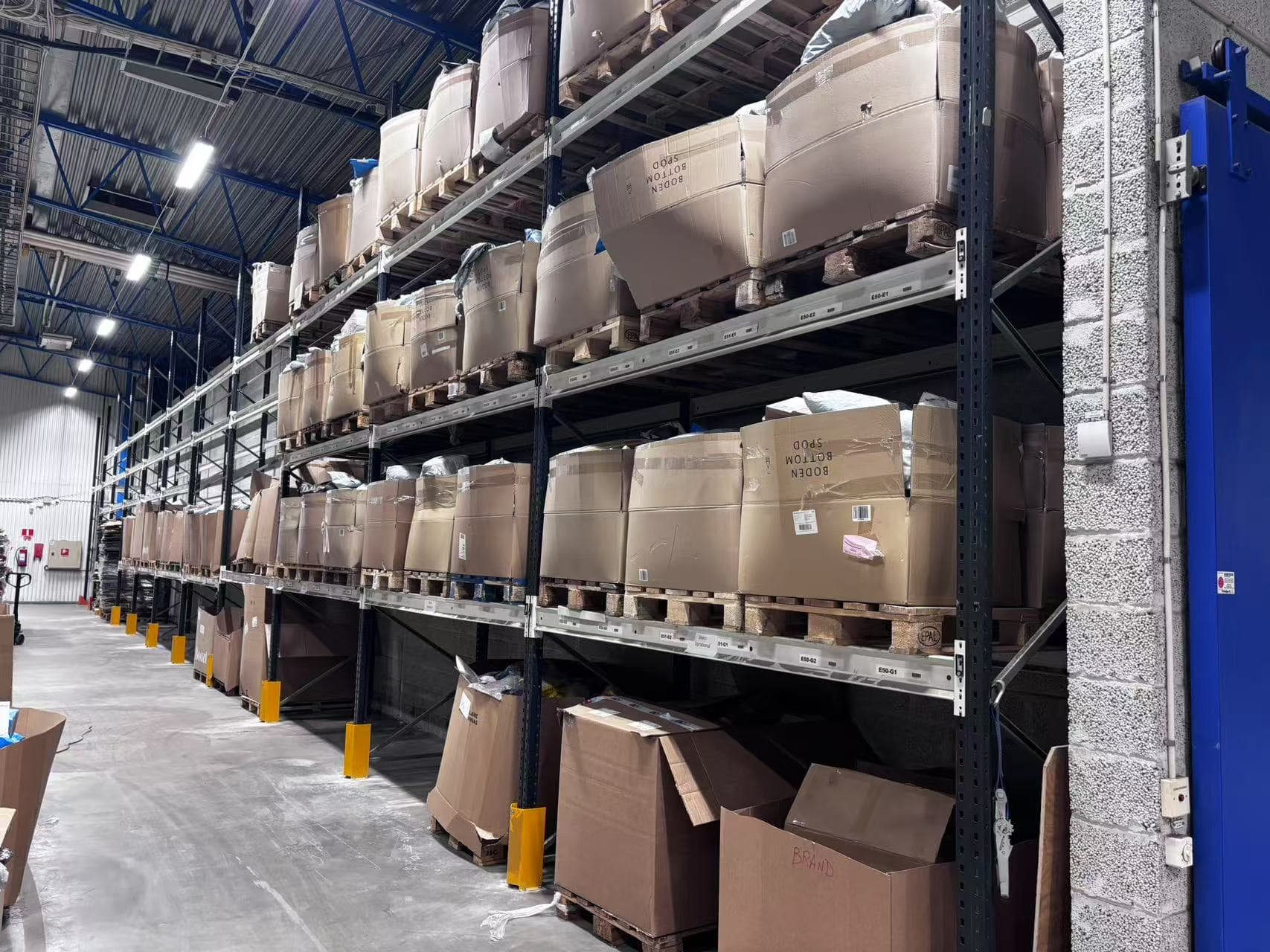
Warehouse · Staffanstorp
Damaged and written-off goods from our logistics and insurance partners — palletised, tagged and ready for verification.
What happens to the goods
Two things that often surprise new partners: how large a share of the goods is in fully usable condition on arrival, and how transparent the resale process is.
Condition on arrival
Transport-damaged or written-off goods usually have packaging damage only — the product itself is intact. Our claims verification separates the few defective products that need repair or recycling from the main volume that can be reused straight away.
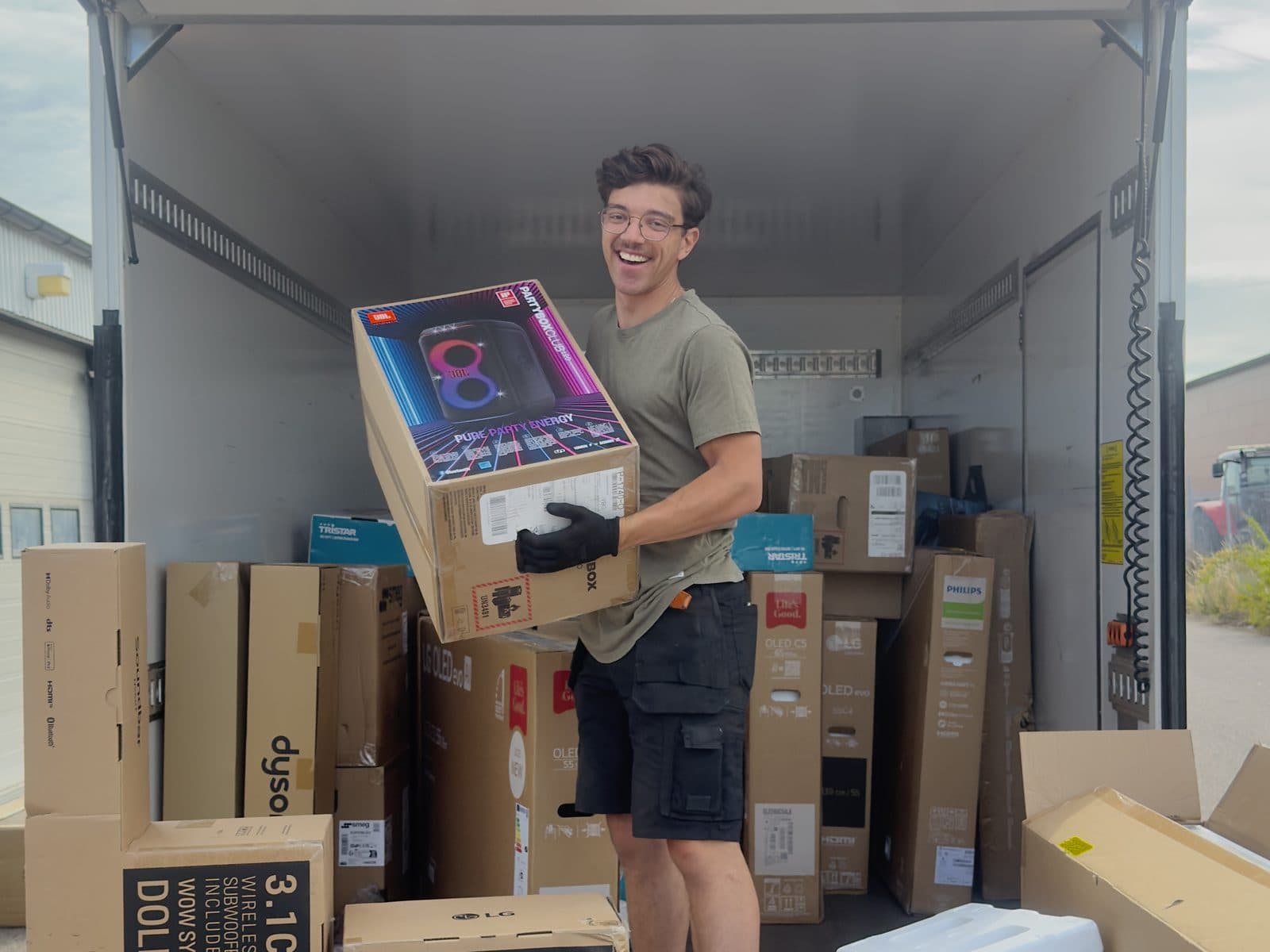
Where the goods end up
Reused items are sold publicly and transparently. The majority go directly to consumers through Rewind's Tradera shop — while high-value items go through specialist dealers who achieve a higher second-hand value.
Tradera
Public auction directly to consumers — fast turnover and transparent pricing. The backbone of our sales.
Pop-up & events
Physical sales at selected events — including at our partners' sites.
B2B auction
Auction platform for special products — industrial, vehicles and machinery.
Trade & specialist sales
Specialist dealers for jewellery, watches, antiques and art — where market value justifies special handling.
A meeting about the process applied to your volumes — costs saved, less fraud, a stronger CSRD report.